

How to Become an AI Engineer and Still Have a Life: Advice from Saed Hussain, a ML Engineer
Foreign expert lecturers are a distinguishing feature of the School for Data Analysts’ training program at the Shakhmardan Yessenov Foundation. This year, Dr. Saed Hussain from the UK participated as an instructor in the seventh Yessenov Data Lab (YDL). A leading machine learning engineer, he works at the tech giant Sage, a software provider for small and medium businesses. The British machine learning expert spoke about his career in AI, and AI agents; what you can achieve by seizing opportunities, and how the most important events in your life come to be.
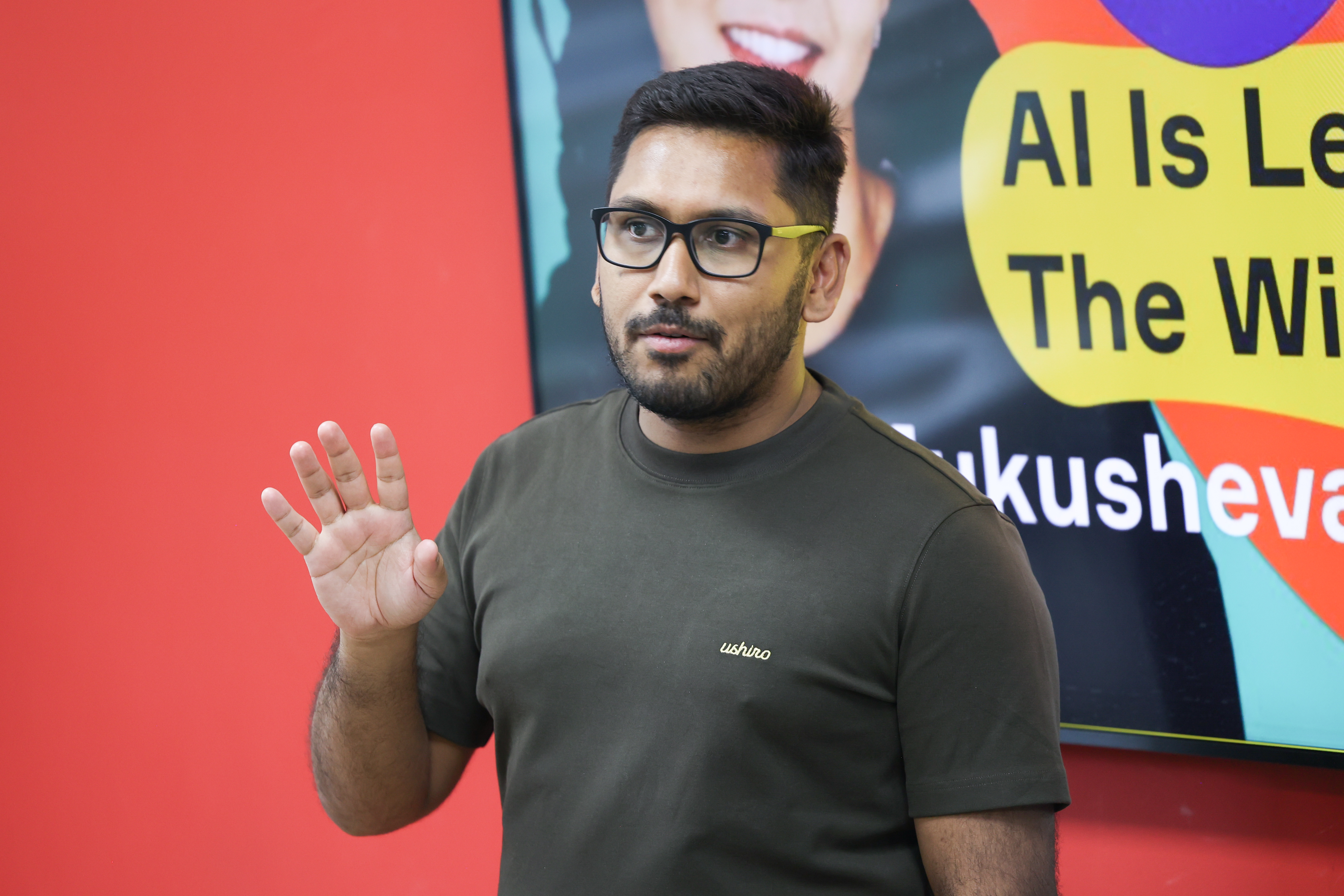 Evaluating YDL
My objective was to make sure that the students acquire practical knowledge they could work with in the future and potentially develop into something bigger. I had to help them understand the fundamentals of artificial intelligence engineering and how to build reliable AI systems.
Today, anyone can use an AI tool to build an application. But the real question is whether you can make this application reliable. It is the engineering component that makes you special in a job market.
Yessenov Data Lab is a wonderful school. Every student here has their own ambitions and their own vision of what they want to achieve. I understand their state of mind perfectly, because I was once deciding what university to go to, what degree to do or career path to choose – it wasn’t easy. Only gradually, through studying and working, did I begin to understand what the next step should be.
Interacting with the students here, I noticed the same thing. They might not know what their next step will be just yet, but that is exactly why they came to Almaty – to share ideas, learn from each other, and explore their options. I actually know a few students who had previously attended the same hackathon in Astana but they never spoke to each other. Yet here, at the YDL Summer School, they became close friends. And I think that’s just wonderful. This week, the students focused on building agentic systems using the OpenAI Agent SDK. And I am very pleased with the results of their final projects. Even more than that – I am impressed.
All of them, without exception, are talented people. They have wonderful ideas, and they are just amazing. I had a wonderful time with them. We talked a lot, and I was able to learn about their perspectives, ambitions, worries, fears, and what makes them happy. Over the course of that week, we formed a true human connection, and I was genuinely sorry that the program had come to an end.
Experience
I did my PhD in Applied AI while working for a defense company, where I designed an Artificial Intelligence that controlled the aircrafts, essentially. We worked on a drone program, and I was experimenting with applying AI to control that drone under duress.
Once I finished my PhD, I decided to go into industry. I worked for another defense company for a few years, where I focused on underwater unmanned systems and equipment. I participated in projects applying artificial intelligence to transportation systems in the UK and other countries.
Over time, I realized that I’m not really interested in government contracting. Most of the projects that we did were government-funded, and I wanted to try myself in the commercial sector. After that, I worked as a data scientist for a few companies. Currently, I work at a company called Sage in London.
Early interest
When I was little I was very interested in robotics, mainly because of that TV show called Power Rangers. Back then, I dreamed of one day building my own robotic suit – something like Iron Man’s suit. Then, as I grew older, that interest in engineering and robotics became more intense, and I decided to do a degree in Robotics Engineering.
During my final year of bachelor’s studies, I got to work on an actual robot that had to navigate in the manufacturing facility autonomously, and that looked pretty cool to me. That was the moment I thought maybe I would go on to do more research.
I entered a fully funded PhD program supported by the British company BAE Systems – one of the largest defense companies in the world. They were funding research within a drone program aimed at applying new emerging technologies to increase the performance of drones. Within this program, I continued to work on artificial intelligence and robotics. As part of this research, I designed a drone control system based on AI and neural networks.
And what came next?
After completing my PhD, instead of joining the company that paid for my education, I went and joined their competitor called Thales, a French defense corporation. I worked for three and a half years there in various roles. I started officially as a research engineer, but I soon realized that I wanted to understand business in tech deeper and develop my own projects in the future.
At Thales, I managed to try myself in several roles. In addition to my research work, I did a secondment – I essentially worked under another division director for a period of time. He became a true mentor to me. It was from him that I learned how business is structured in huge international companies and what challenges the defense industry faces.
But after a few years, I realized that I no longer felt fulfilled. The world of government contracts turned out to be a universe with its own rules. If you stay there for too long, you gradually end up dealing mostly with documents, meetings, and bureaucracy. I didn’t like that. I always wanted to get more hands-on – that’s exactly why I went into robotics in the first place. So, I decided to leave the government sector completely.
The most valuable lesson in life
I think the most dangerous thing is to easily get caught up in an endless race. You are constantly striving higher and higher: building a career, climbing the corporate ladder, thinking about the next position. But while you are climbing up, life goes on. Working in the defense industry was intense and secretive. It didn’t really align with my personal life. I would be away for the whole week, come back home for the weekend, do my laundry, and head out on another trip. Meanwhile, real life was happening all around. People lived, changed, and went through major life events, and I simply didn’t have the time to notice.
And then comes the moment when you finally achieve that goal which you thought was supposed to make you happy. But it’s never like that. Perhaps the main lesson I’ve learned is to slow down and try to live in the moment. And try not to wait for life to happen to you, but to actually try to make your life happen. Carpe diem!
I grew up with the belief that you just have to work and work, striving for the top – that’s how I was raised. But when you finally find yourself at that top, it turns out to be empty. Meanwhile, your friends are already starting families, having children, moving to other cities, and building their lives. And you realize that there is so much more to life than just work. The older I get, the more I begin to appreciate this. Perhaps that is exactly why I am here right now.
Ending up in Kazakhstan
A year ago, I completely by chance met someone from your Foundation. We stayed in touch, and then he messaged me and invited me to come. At first, I hesitated – I didn’t even really know where Almaty was located. I knew nothing about what was waiting for me here. We only talked a little, and I wasn’t sure if I wanted to fly to Kazakhstan. But in the end, I agreed. I already had friends in Kazakhstan. By that time, I had visited Kazakhstan three times and really enjoyed my trips. I wanted to meet new people and expand my social circle.
Universal networking
Human connections truly matter immensely. Ultimately, life is not just about work. It is about communication, meetings, new experiences, and the people we meet along our path. If I hadn’t said ‘yes’ back then, I would have never ended up in Kazakhstan. I wouldn’t have met your wonderful team and these students. Perhaps we will keep in touch for many years to come. It is precisely these human relationships, shared experiences, and conversations about what makes us happy, what worries us, and how we see the future that are the most valuable things. I understand these feelings very well. They are the same for all people. And that’s great.
AI agents
An AI agent is an artificial intelligence system capable of making decisions and executing tasks autonomously to achieve a specific goal. Imagine you want to travel from Almaty to London for four days. You need to book flights, find a hotel, plan an itinerary, calculate expenses, and stay within a certain budget. Normally, people do all of this manually: opening Booking.com, Google Flights, and other websites to compare options, read the information, and make decisions. Now, imagine you have an intelligent assistant, an AI assistant. You simply tell it: ‘Plan a trip to London for me on these dates. Here is my budget.’
The AI agent autonomously goes out on the Internet, searches for suitable flights, hotels, and sightseeing activities, calculates the total cost of the trip, checks whether it stays within your budget, and finally provides you with a ready-made travel plan.
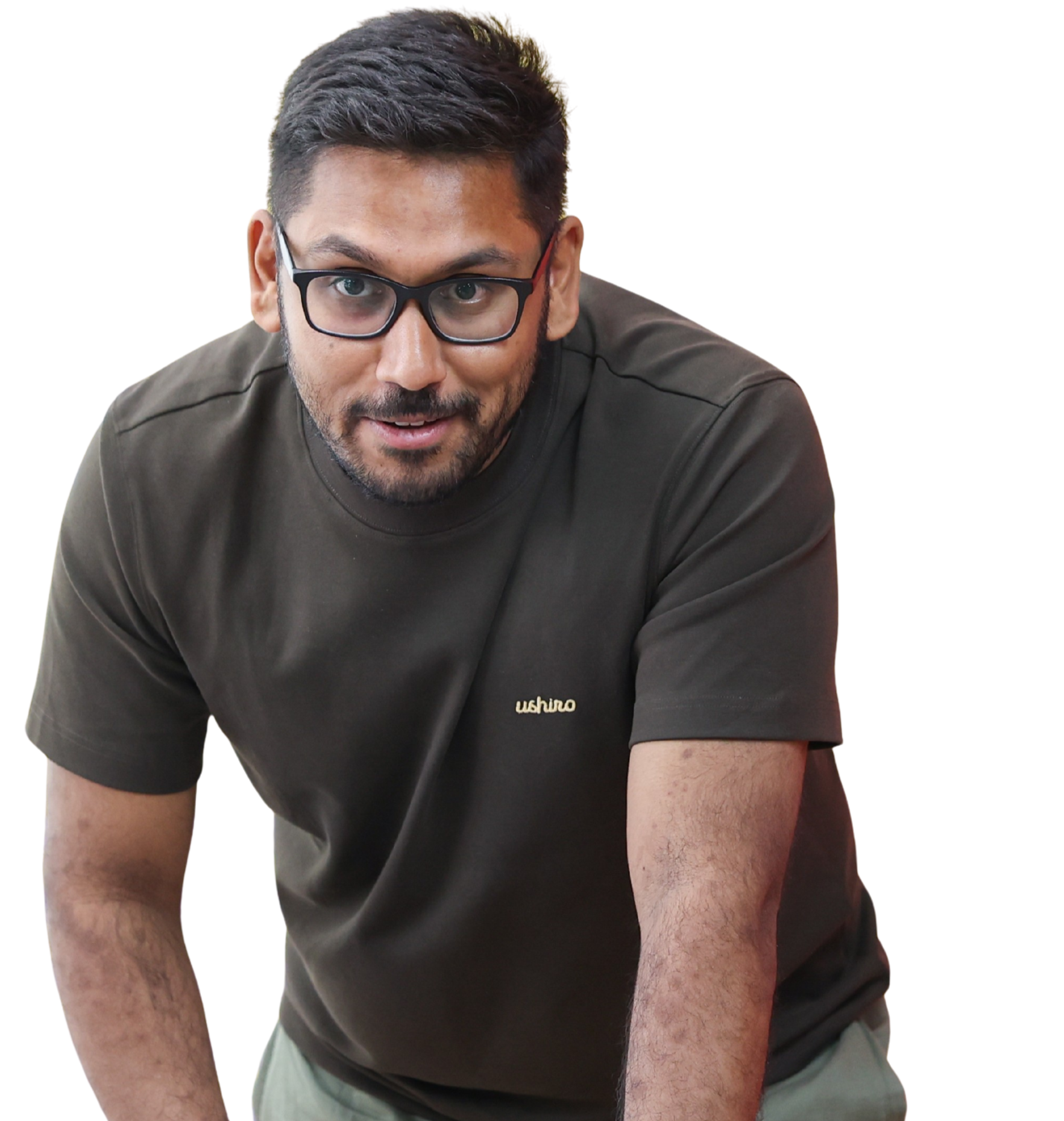
My week in the YDL training program was dedicated entirely to the practice of building these types of agents. We spent roughly 80% of our time on hands-on coding and only 20% on theory. I guided the students through the entire journey of creating an AI agent – from a simple tutorial to a production-ready solution for real-world projects. If they feel comfortable writing on their CVs what they have learned, know how to write an agent, and use certain libraries to implement agents with good quality, I will consider my mission accomplished.
What should young people do?
I think every person will encounter opportunities in life that trigger both interest and fear at the same time. The best thing you can do is to go for it. That is exactly how we grow. That’s how we stretch our comfort zone. So my advice is very simple: say ‘yes’ to life more often. Take on more opportunities that scare you. Sometimes, the more scared you are to take the first step, the more value it will bring. You never know in advance what connections, friendships, or events you might develop out of this process.
Essentially, the next step in your life lies just beyond that door of fear. You simply need to open that door and walk through it. The main thing is to take that step. You may like what you find on the other side, or you may not. But at least you will know for sure whether it is your path or not. Take risks. Step into the unknown. I would say, make life happen – don’t wait for life to happen to you. You never know where it will lead, but that is exactly how the most important events in our lives come about. This is probably the best piece of advice I can give, regardless of the field of activity young people choose.
Seen by: 328