




Yessenov Data Lab 2026: Who Can Apply, What You’ll Learn, and How to Apply
On March 26, the application process for the Yessenov Data Lab (YDL) Program has been opened. This Summer School has been organized by the Shakhmardan Yessenov Foundation, established by Galimzhan Yessenov, since 2018, in partnership with Almaty Management University. Over the years, 114 Kazakhstanis have become winners of the Program. Another 20 participants will join them this year. YDL is an intensive course designed for anyone whose career requires data analytics skills. The Program’s creators, organizers, and visionaries share what to expect from the School this year.
 How will the Competition be held?
The competition will be held in a fairly traditional YDL format, based on a proven model. Applications have already been opened and will remain open until April 28. After that, 3 challenging stages of the selection process will begin. Grigoriy Lee, the Yessenov Foundation’s Program Manager, explained, that everything would conclude by June 5, when the list of winners – Kazakhstani participants who truly need the knowledge offered at the Summer School and who, as they say, can handle the Program – would be published.
All the details of the competition are outlined in the Program Provisions, which have already been published on the website of the Science and Education Foundation. The Program is open to Kazakhstani citizens aged 18 and over. They may be working researchers or students enrolled in bachelor’s, master’s, or doctoral programs at Kazakhstani HEIs. The fields of study are typical for all programs of the Shakhmardan Yessenov Science and Education Foundation: technical and natural sciences.
 To participate in the YDL competition, a candidate must possess strong analytical skills and a deep commitment to pursuing scientific research or advancing IT technologies in Kazakhstan. An applicant is expected to have a solid understanding of the basics of statistics and linear algebra, as well as a grasp of fundamental programming concepts.
The organizers of the YDL Summer School also have specific technical requirements. Future participants must have a well‑organized workspace for the online part of the training and a personal laptop with specifications sufficient for smooth programming. The recommended parameters are detailed in the official Program announcement.
Preference will be given to candidates with an English proficiency level of B1 or higher and a proven track record in research, such as published articles or independent research results, demonstrating their interest in the scientific field.
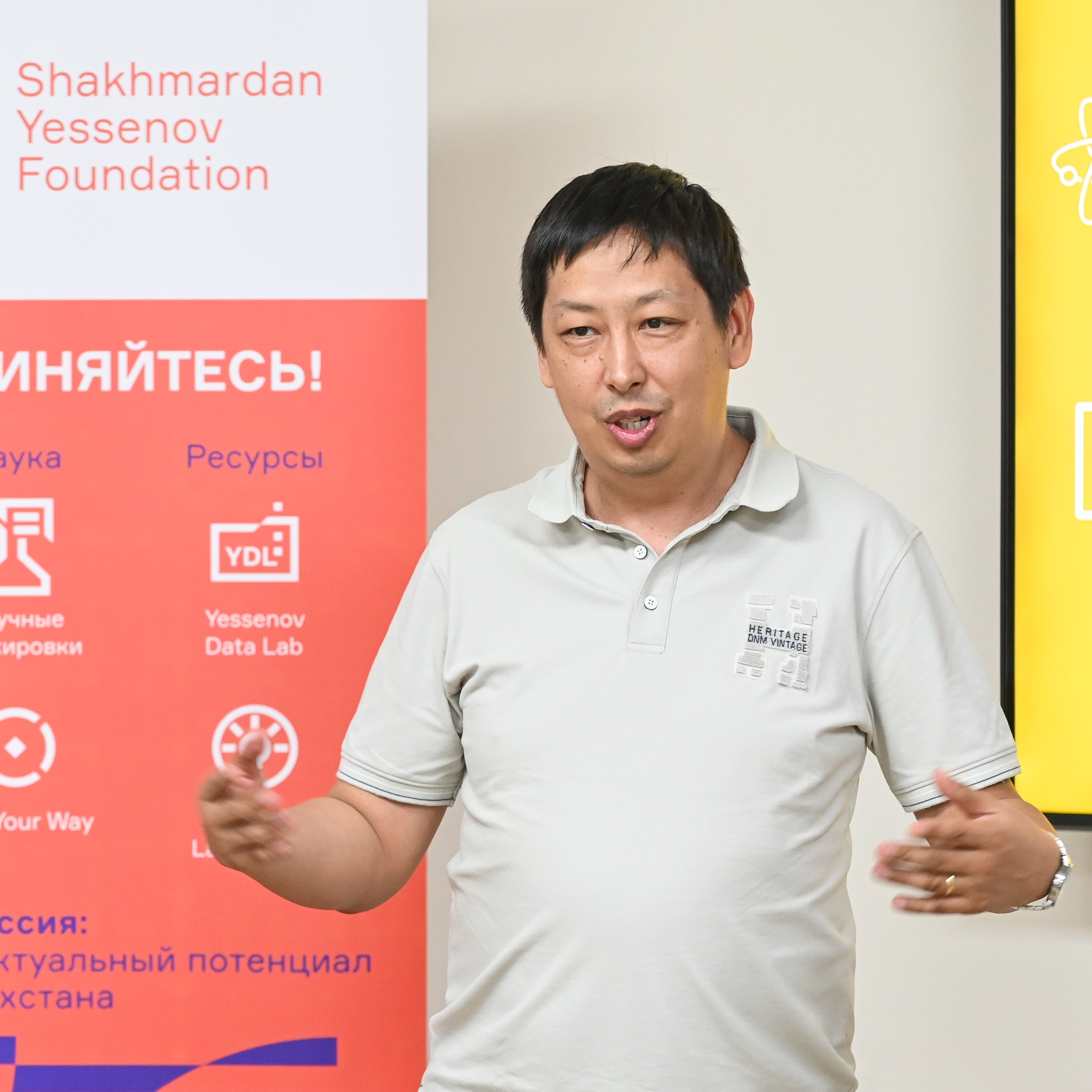 “The competition has 3 stages. First comes a simple screening of applications by the Foundation’s staff and invited experts. Next is the testing stage: 30 questions to be completed within one hour. The tasks are diverse, covering matrices and graphs, linear equations and linear regression, function graphs and variables, arrays (using the Python programming language), as well as basic knowledge of probability theory,” said Timur Bakibayev, Doctor of Science in Computer Science and a long-time YDL instructor.
“Even though the testing is conducted online, we have developed an effective system for detecting and preventing cheating. The best candidates will advance to the third round – the interview. This is a serious conversation with a Foundation’s expert, where the competitor’s analytical skills, professional qualities, programming skills and experience, intellectual potential, and motivation for participating in YDL are evaluated. Experts also take into account the candidates’ overall communication skills, get a sense of their value system, and assess their level of emotional intelligence and psychological maturity,” added Kuanysh Abeshev, Doctor of Science in Mathematics and another long-time YDL instructor.
According to the organizers, such a rigorous selection process ensures that the participants of the Summer School have a similar yet high level of proficiency, since the Program itself is quite challenging. Traditionally, it includes studying Python and chatbots, 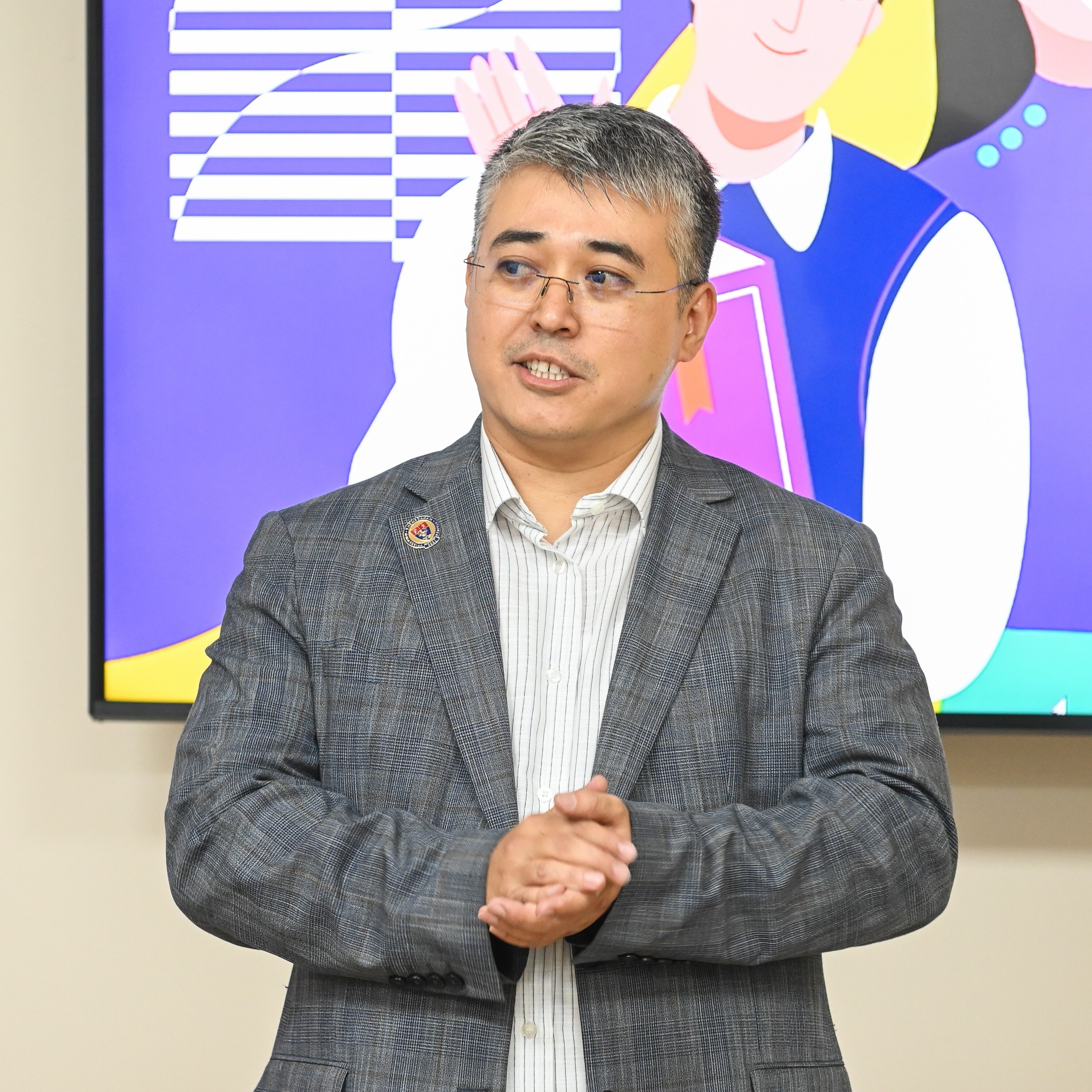 machine learning, large language models, and computer vision. One week is planned for developing AI agents. As of this publication, the YDL 2026 program is still being finalized, and only a draft version is currently available.
Kuanysh Abeshev explained why.
“We want to give participants the most up‑to‑date topics, so the final program will be announced closer to the start. The field is changing rapidly – two years ago large language models were considered exotic, today they are already a basic tool. We’ll make great progress in 4 weeks. And this is not a random set of subjects, but a logical trajectory from fundamentals to what is truly in demand in the world right now.”
The YDL Summer School for Data Analysts, organized by the Shakhmardan Yessenov Foundation, is set to begin this year on June 15 and will conclude on July 10. The first two weeks will be conducted online, while the final two weeks will be held offline in Almaty at Almaty Management University, the Foundation’s partner for YDL. Only 20 applicants who pass the rigorous selection process will be admitted to Yessenov Data Lab – the Summer School for Data Analysts. The program announcement and YDL 2026 Provisions are now available on the foundation’s website, where applications can also be submitted.
Seen by: 681