

Winning an Internship Grant Can Take More Than One Try
Aidar Shakerimov. Speciality: Machine Learning, AI, Robotics. Internship: Hosei University, Japan
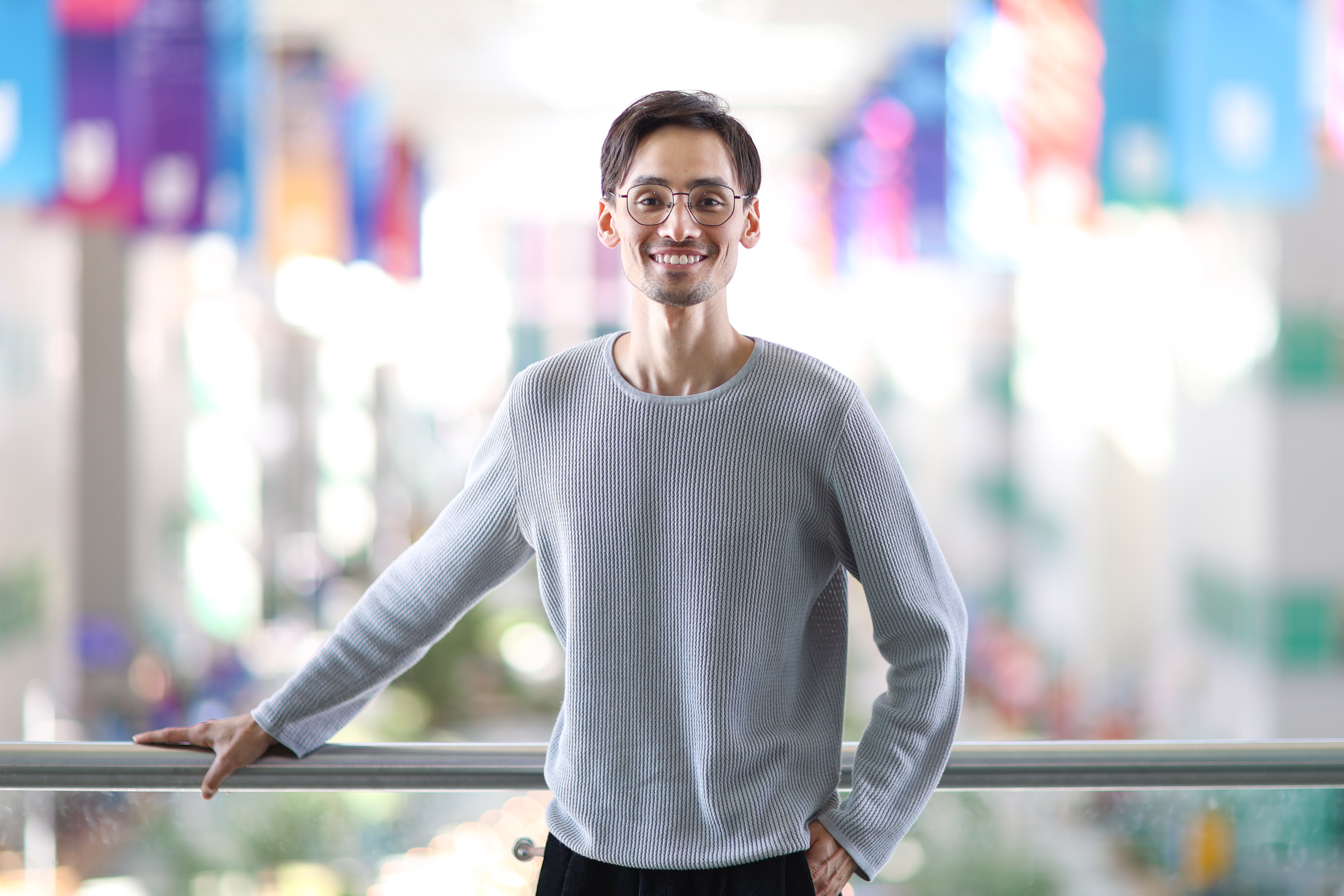 A 27-year-old researcher at Nazarbayev University is proving through his work that it’s possible to pursue science right here in Kazakhstan by learning from international colleagues and completing internships with them. Aidar Shakerimov recently completed a research internship in Japan, supported by a grant from the Shakhmardan Yessenov Foundation. There, the young scientist focused on developing a system for detecting defects in concrete structures. In this story, Aidar shares how to win a grant and make the most of an internship to boost your development.
The Yessenov Foundation Grant Competition
It was the kind of competition where simply participating was a rewarding experience. Surprisingly, I wasn’t nervous at all. Instead, I felt something completely different. Meeting the other candidates truly inspired me. Even while writing my motivation letter about my dream research, I realized that it was the first time I had ever thought so deeply about where I am heading and how much what I do really matters.
Why I won
I can only assume that it wasn’t about my advantages, but rather about being in the right place at the right time. That’s just what happens when you are moving in the right direction. People who are looking for someone just like you appear and offer their help. A few years prior, I had applied for this grant, but back then, I didn’t understand what I was looking for or why. This time, I knew, so everything turned out differently.
What it takes to win
Know what you are striving for and believe in your path. For those who have already received the internship grant, I highly recommend considering Japanese universities. Despite having relatively less global prominence, the quality of education and research infrastructure there is exceptional. An internship in Japan is a guaranteed high-quality experience.
 Why I chose Japan
I have always been drawn to Japan – its culture, its history… On top of that, my professor at Nazarbayev University has strong academic ties to Japan. Professor Tomoko Ozeki, a highly accomplished scientist in the field of AI, as well as a kind and wise person, is one of his connections. I realized that under her guidance, I could learn not only about research but also about how to approach other people.
What I worked on during my internship
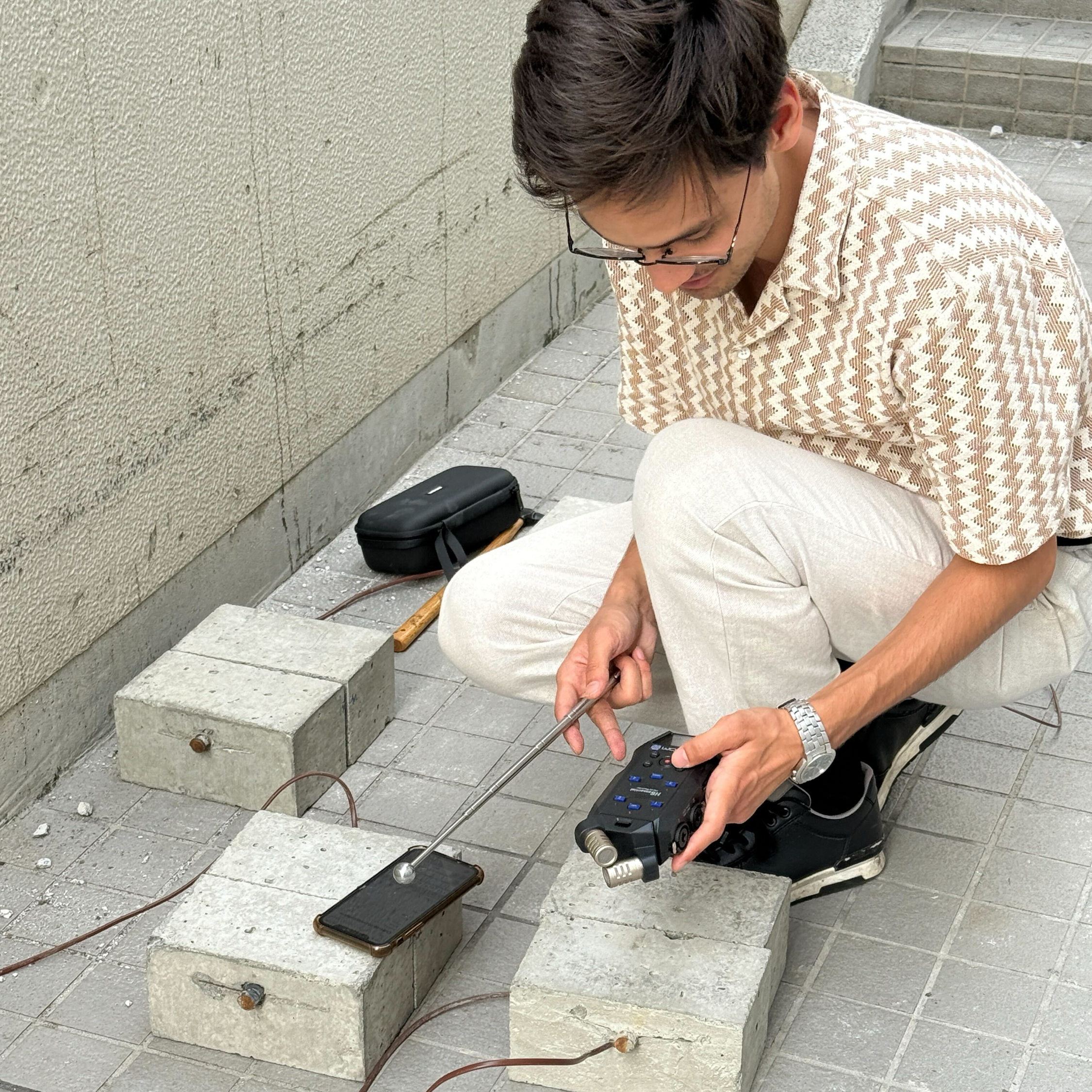
Out of all the research fields offered by the laboratory, I chose to focus on the strength of concrete structures. Just imagine this: every couple of weeks, Tokyo experiences an earthquake. Concrete structures there are constantly being tested for resilience. So I was deeply driven to contribute to the creation of a device that could help detect structural defects. My research focused on developing systems for the automated detection of defects in reinforced concrete structures.
My takeaways from Japan
The supervisor’s professionalism, the students’ approach, and the working atmosphere of the laboratory. My Japanese colleagues work late into the night with absolute commitment. Every presentation we had resembled a mini international scientific conference. The depth of topic analysis turned ordinary student projects into real scientific discoveries.
What we achieved
I tested various deep learning algorithms and applied cutting-edge techniques. As a result, using neural networks, we developed a cost-effective, efficient, and highly accurate method based on analyzing acoustic patterns generated when a rotating hammer head strikes the wall. This method achieves 100% accuracy in detecting defects.
Future plans
Upon my return from Japan, I continued working as a researcher at the Institute of Smart Systems and Artificial Intelligence (ISSAI) at Nazarbayev University. However, my connection with Japan continues. We are currently preparing to present our project at an international AI symposium in Tokyo. At the same time, I am applying for a PhD program at one of Japanese universities.
Is there life beyond science?
My peers and I get together to play board games and go on picnics. I also play floorball – a mix of hockey and soccer – for the Astana team. I’m learning Japanese and watching anime. Recently, I started learning video editing. I got so into it that I found myself wanting to do nothing else.
24.08.26, Stories
Seen by: 211