



HOW TO DEVELOP AND LEARN A FOREIGN LANGUAGE
According to the latest EF English Proficiency Index (a ranking of English language proficiency by the international education company Education First), Kazakhstan ranks 103rd out of 116 countries worldwide. The level of English proficiency in the country is classified as ‘very low’. However, every year, more and more young people in Kazakhstan realize the importance of learning the world’s number one language of international communication. To help everyone who wants to improve their proficiency level, we reached out to our professionals – native speakers and certified teachers of English Antony Durrant and Courtney Bailey. Both of them are main instructors of the Shakhmardan Yessenov Foundation’s English Language Program. Here are their tips to help you grow not only in English but also in your career and life in general.
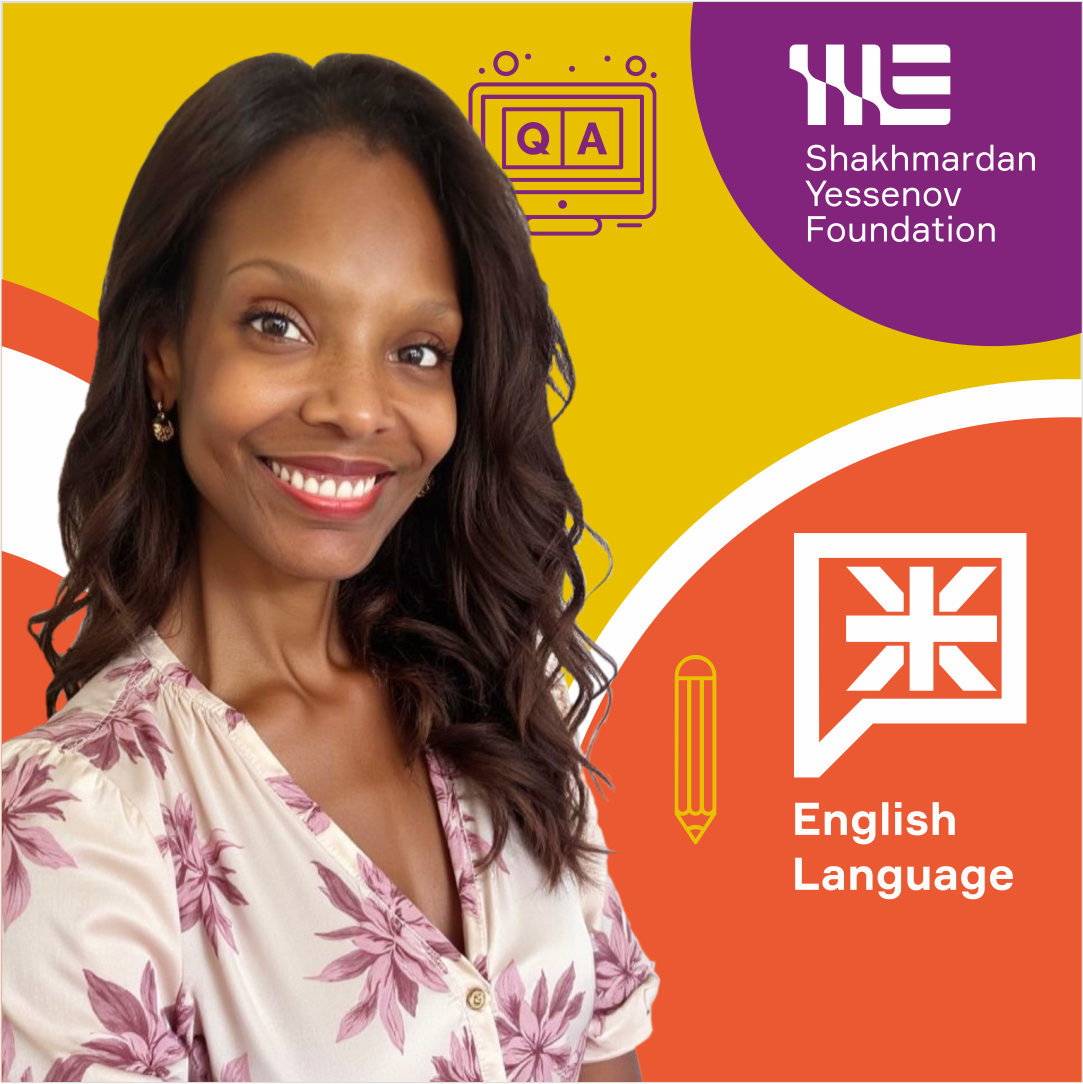
 Courtney Bailey is a lecturer of English, international teacher trainer and all-around language enthusiast. For over 10 years she has been teaching and traveling across the globe. Courtney has worked with students and teachers on nearly every continent and brings energy, creativity and a deep love of communication to every classroom. Whether she’s helping future educators build confidence, breaking down big ideas in simple ways or leading workshops for universities, Courtney is all about making English language learning relevant, inclusive and empowering. Courtney teaches English to participants of the language program run by the Shakhmadan Yessenov Foundation. And she’s ready to share some tips that will help you not only with learning foreign languages.
When I think of the young people I have met across Kazakhstan, I see bright minds, thoughtful questions and bold ambitions. I also sense something deeper – a quiet strength. They are a generation preparing to lead with both intelligence and heart. The world is calling for visionaries who can adapt without losing direction. And if you are one of them, here’s what I want to tell you.
Learn to Move with Change
The future belongs to those who are agile. Change is not something to fear – it is a challenge to understand and accept. Life may not unfold exactly as planned, but flexibility will open new paths. Adaptability is not about giving up control. It is about responding with creativity and focus.
Learn to Understand Yourself
Your emotions carry wisdom. Disappointment, inspiration or anxiety – these are all signals. Listen to them and lean in. The more you practice emotional awareness and self-regulation, the more confident and grounded you become.
‘Comparison is the thief of joy.’
Measuring yourself against others steals the chance to appreciate your own growth. Your development is a journey shaped by unique challenges and opportunities. Compare yourself only to who you were yesterday. Be a good person, but do not waste time trying to prove it. Let your actions speak for themselves.
See the Bigger Picture
Problems never exist in isolation. Everything in life is interconnected. Systems thinking helps you ask deeper questions and see how even your small actions influence larger processes. This is how true leaders think.
Develop Digital Literacy
Technology is more than a tool. It is a language. Learn to speak it well. Know how to search for information wisely, present yourself professionally online, and use digital platforms to express who you truly are. And in every space you enter, virtual or physical, ‘do not adapt to the energy in the room, influence the energy in the room.’ It’s challenging but let your presence bring kindness, encouragement, and mindfulness.
 Find Work You Love
Do not wait for permission. Start small. Help the people close to you. Create something meaningful or beautiful. When your work aligns with your heart, it becomes your legacy. Ask yourself, ‘What needs my voice or my energy?’ They say, ‘Think global, act local.’ Passion projects may begin small, but over time, they shape your path and deepen your sense of purpose.
Stay Open to Learning
The phrase ‘I do not know yet’ is courageous and strong. Stay curious, ask questions, learn to accept feedback, and keep growing. People will notice. Opportunities will find you. And wherever you go, try to leave people or situations better than when you found them. This is how true impact is made.
Remember Your ‘Why’
When life feels uncertain or overwhelming, your ‘why’ is what will keep you steady. It is the reason you started and the reason you will keep going. You do not need to know everything today. But if you stay true to your values, you will see that you are exactly the kind of person the world needs.
Antony Durrant is a teacher who works mainly in universities, particularly with exam preparation for academic studies in English, IELTS, Cambridge Advanced and Proficiency. He is from the UK but lives in Greece. He also teaches business English for professionals and had his own school for a while. Antony works as a writer for publications such as ELT News and Athens News and has written a grammar book for university students taking a foundation year in English in the Sultanate of Oman. In his spare time, he enjoys hiking in the mountains. He is also a professional painter. You can see his work on this online gallery. He also teaches students at regional higher education institutions in Kazakhstan as part of the Shakhmardan Yessenov Foundation’s English Language Program.
How to Succeed in English?
In looking at the ways in which language learning can be most effectively realized there are certain truisms that abound, such as: obstacles get a little harder at each stage, how time-consuming and exhausting it all is, and the importance of keeping at it. That’s why it’s crucial to guard against impatience and avoid making naive assumptions like, ‘I can get from B2 to C2 in 6 months!’
Focus on Studying!
Yes, this can appear off-putting to you. But if you are clear about your motivation, dedicate enough time to studying, use effective methods, with exams and goals having been properly taken into account, success is guaranteed. Failure usually happens through a defective approach to one or more of the aforementioned.
What Do You Really Want?
Ask yourself this question. It’s all about motivation: extrinsic or intrinsic. Are you studying because you love the language, find it interesting, or are an Anglophile (intrinsic motivation)? Or is it because you need it for a job, an exam, or to emigrate (extrinsic motivation)? Or maybe it’s a mix of both? Your answer will shape your approach. For instance, if you dislike English but pick things up fairly quickly and need to get a qualification for a job, then a B2 certificate can be obtained relatively 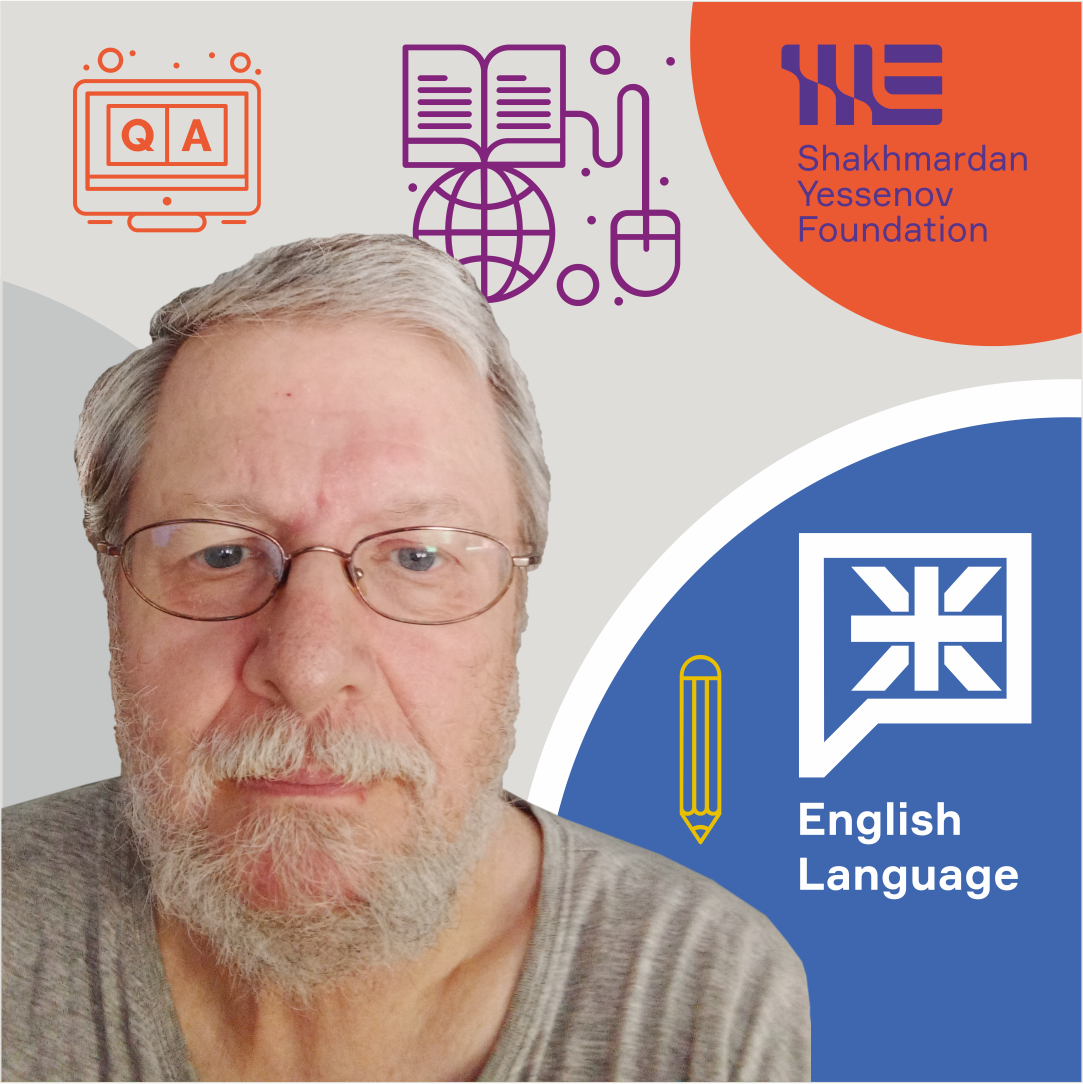 painlessly. But if you have set your heart upon going into academia in the US, the UK or Australia, and your speciality is a humanities subject, then you may need to reach a C2 level, which is not easy. Requirements for students are generally lower for the sciences (B2, C1) than the humanities (C1, C2).
How Much Time Will It Take?
Malcolm Gladwell in his book Outliers – which you may have read – says that attaining proficiency in any discipline, from chess and tennis to learning English from scratch up to C2, needs about 10,000 hours of practice. This number can be disputed (a lot depends on the quality of practice and innate ability), but broadly speaking, it seems accurate enough.
Do You Have the Time?
What if you are working hard and are too tired to engage in lessons after work? Ideally 2 hours a day, 5 days a week of English would mean about 2 years of study to get from A1 to B2. However, a great deal of that is contingent on whether the lessons will be given in English (and not partly the student’s native language), how much attention is devoted to speaking, and the quality of feedback and assessment provided. The hardest stage is the transition from B2 to C2. At B2 you should know about 4,000 words. At C2 it could be up to 16,000 – including phrasal verbs, idioms, expressions and collocations. So be realistic!
Is There One Perfect Method?
No – to each their own. The most effective method is to live in an English-speaking country, to immerse yourself in the language, but not everyone can afford that. However, regular contact with the language is essential. So: read, listen, write, speak. Note down vocabulary with sample sentences (not just the word and translation), and use new expressions in speech.
Mobile Apps
You can also use mobile apps – there are now a large number of them: FluentU, ELSA Speak, Babbel, Duolingo, HelloTalk, Rosetta Stone, and others. But relying solely on them can be risky. One user, for example, was learning French through the grammar-translation method using an app, but found himself helpless in real conversation. Later, he moved to Greece and started speaking with his students’ parents – and began speaking Greek without taking any courses, simply through immersion in the environment.
Exams
If you have considered motivation, time, and methodology, then the final stage is the exam. Employment, study, emigration – all will require you reach a certain level in a particular exam. Sometimes, you can choose between several exams. The Cambridge Exam Suite (FCE, CAE, CPE) is valid permanently. It has a grammar component known as English in Use. IELTS, TOEFL, TOEIC, PTE – have a shelf life of only 2 years. IELTS comes in two forms – academic and general. TOEFL is for academic purposes (lectures, seminars, etc). TOEIC is more work-related. It’s worth noting that exams can usually be taken as a computer based test or in written/oral form. If your handwriting isn’t great, go for the computer-based version.
What to Do with AI?
Now, thanks to ChatGPT and other AI platforms, you can significantly simplify your tasks: writing essays, generating ideas, rephrasing assignments… But in the exam you will have no access to AI whatsoever. A real teacher can give you detailed feedback which, as of now, AI is less adept at. For instance, one student made great use of ELSA Speak – it really helped her improve her speaking skills. But when it came to writing essays, she always relied on ChatGPT. As a result, her reading, listening, and speaking were at a high level, but she completely failed the writing section. Her final score ended up being unsatisfactory because of that. So don’t be lazy! And good luck in your studies!
30.08.25, Newsfeed
Seen by: 1,178