

Yessenov Foundation Research Internship: How to Join European Labs
Medet Dzhumadildayev // Azaliya Turgunova // Research Internships in World Laboratories
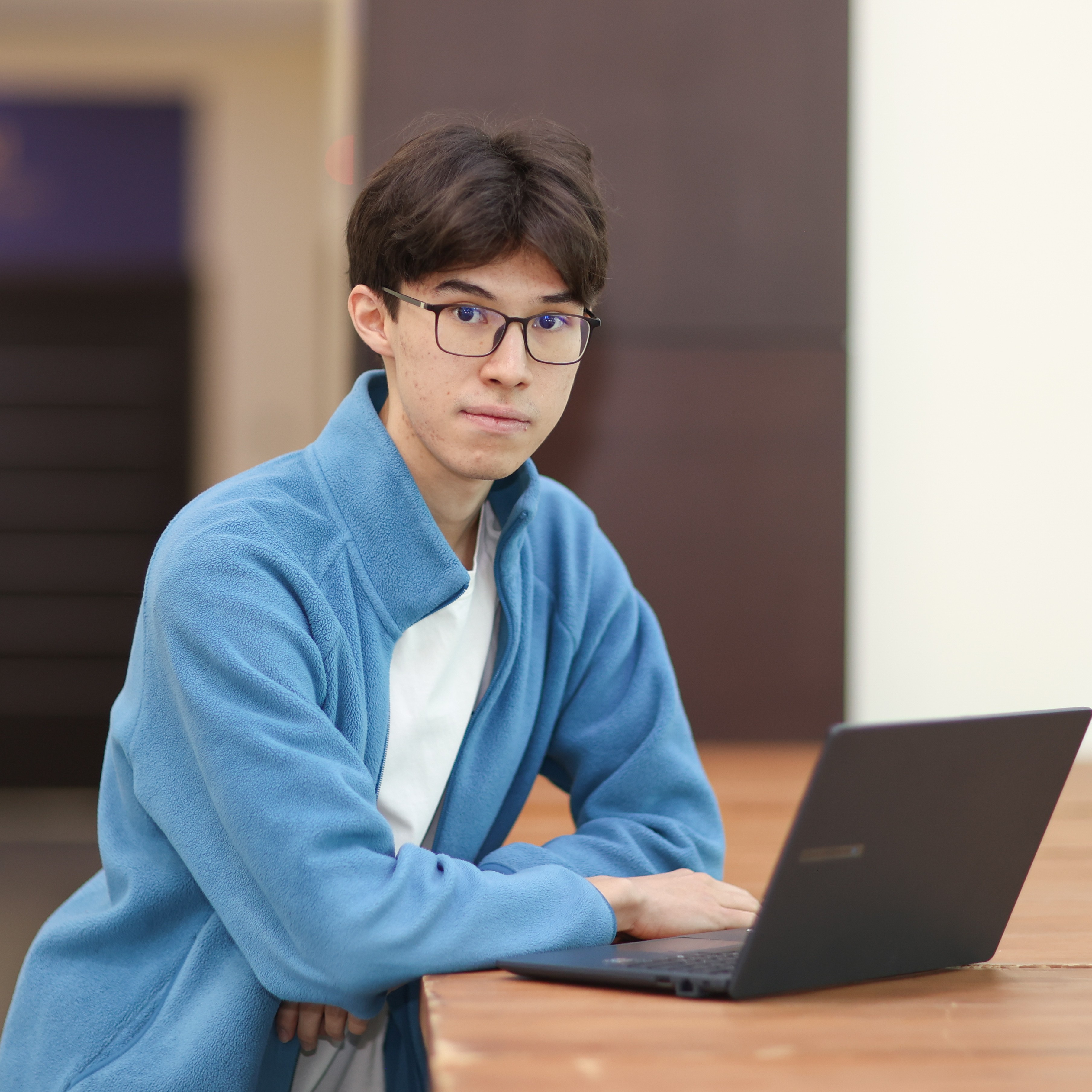 A 22-year-old mathematician from Almaty and a student at NU, won a Shakhmardan Yessenov Foundation grant a year ago and completed an internship in France at an educational institution renowned for its scientific specialization in mathematics.
Why Mathematics?
Oh, it’s a very beautiful science! I love the universality of its statements. The same phenomenon can emerge everywhere: in physics, computer science, economics, etc.
The Yessenov Foundation Winners Community
Like many other grant competition participants, what I enjoyed most was the group interview as it gave me the opportunity to interact with other participants. In the spring, I also attended the annual meeting of the winners of the Foundation’s programs, where we met in person.
Why I Won and How to Succeed in an Internship
The key is to answer the questions from the Foundation’s experts and professionals sincerely and honestly during the interview. You should also be able to convincingly demonstrate your enthusiasm for science and the clear link between the grant and your professional future. Once at the internship, don’t be afraid to take the initiative and pursue what truly interests you. Make full use of all the laboratory’s opportunities and don’t hesitate to ask questions whenever something is unclear.
Why This University
France is home to one of the strongest mathematical schools in the world, and it is precisely where algebra, topology, and geometry – fields that interest me deeply – are actively advancing. In addition, the University of Strasbourg hosts regular seminars and attracts top experts from all over the globe. That is why, in the summer of 2026, I completed my internship there at the Advanced Mathematics Research Institute.
What I Did During the Internship
I worked under the supervision of Professor Vladimir Dotsenko on algebraic operads. In simple terms, this is a way to describe all the operations in a mathematical system and the rules for combining them. We focused on optimizing a calculator for computing “Gröbner bases” for operads. In addition, we are still working on another research project together with Professor Jean-Sébastien Sereni.
The institute constantly hosted various seminars, which I regularly attended. I also managed to participate in the IRMA-SCMS Summer School on Algebraic Geometry and even gave a short presentation there. While there, I had the opportunity to speak with Professor Frédéric Chapoton, Research Director at the French National Centre for Scientific Research.
Internship Outcomes
I gained a deeper understanding of the questions and interactions in algebra, combinatorics, and graph theory. We developed a modified version of the program for computing Gröbner bases for algebraic operads, which was the goal of the internship. The program is based on the pioneering work of Vladimir Dotsenko and Anton Khoroshkin. Our method makes it possible to determine the complexity of different algebraic structures.
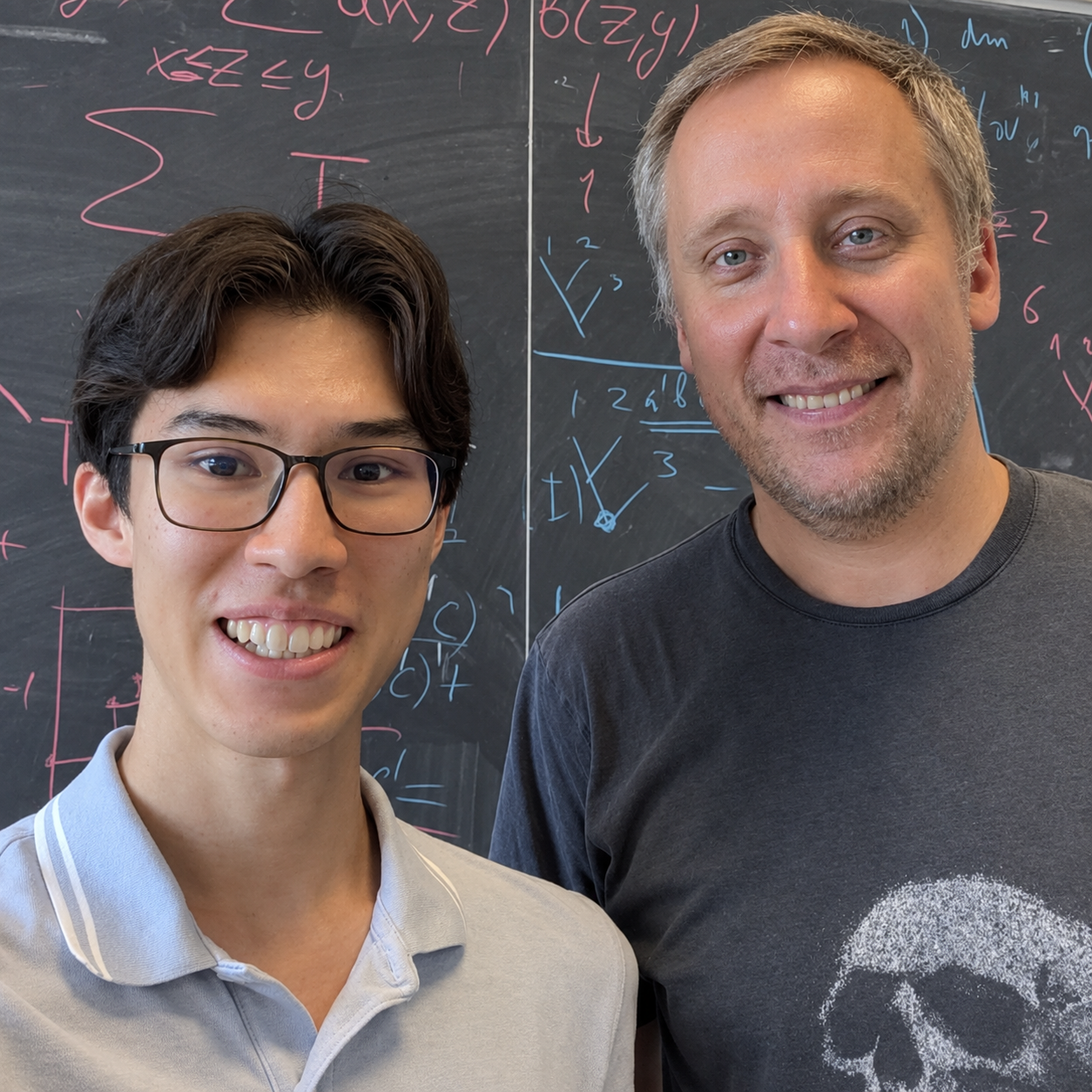 Every new day of the internship gave me food for thought. I realized that I was learning more and more, while also becoming aware of how much I still had to learn. Strasbourg was also valuable from a networking perspective. I met members of the mathematical community, learned about the research tools they use and what kind of research is currently being conducted. I am grateful to the professors I had the privilege of learning from. They recommended academic programs I could apply to, as well as colleagues with whom I could collaborate.
Leisure Time
Strasbourg is a peaceful city. It has plenty of parks where you could go for a run and relax. Parc du Contades was located not far from where I lived. I often sat on a bench there solving math problems. The trip to France was a great opportunity to learn French, as the seminars at the institute were held mostly in that language. Being constantly immersed in a French-speaking environment was very beneficial. I wouldn’t say I mastered the language, but it was a valuable experience. I would strongly recommend that everyone make an effort to learn and practice the language spoken in the country where they will be doing their internship.
Contrasts
It was my first experience living abroad. A lot in France differs from what we are used to in Kazakhstan. People I randomly passed on the street would often apologize and thank people when someone gave way to them. Meanwhile, places where you could grab a bite to eat would close right after lunch and only reopen for dinner. And, of course, sorting all household waste was mandatory.
Where I Am Now and What’s Next
I am currently completing my bachelor’s degree at Nazarbayev University. The next step is to pursue a master’s degree in pure mathematics – a deep dive into theory. Professor Dotsenko advised me to explore a wide range of mathematical fields, as the most interesting discoveries happen right at their intersection. In the future, I may consider teaching modern branches of mathematics.
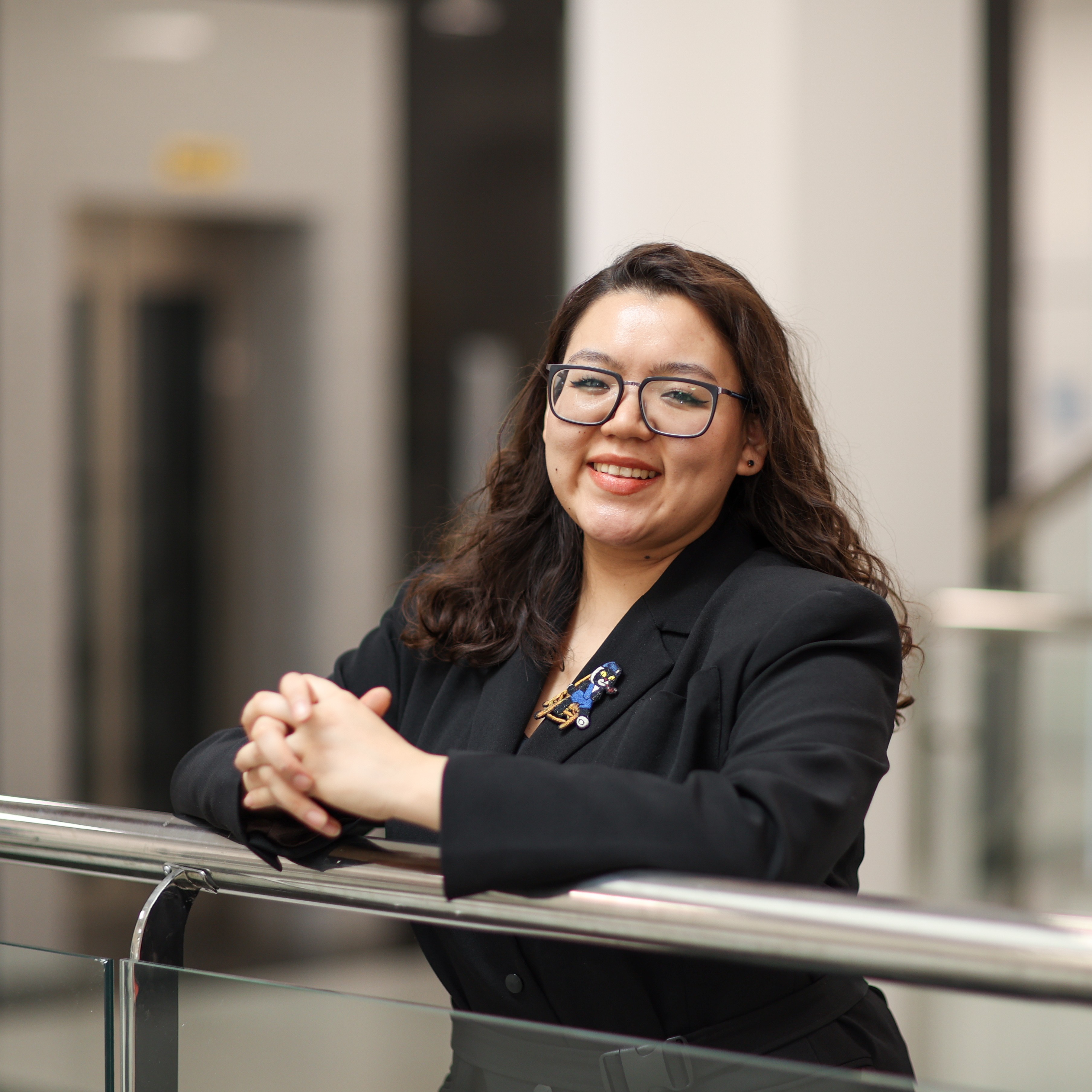
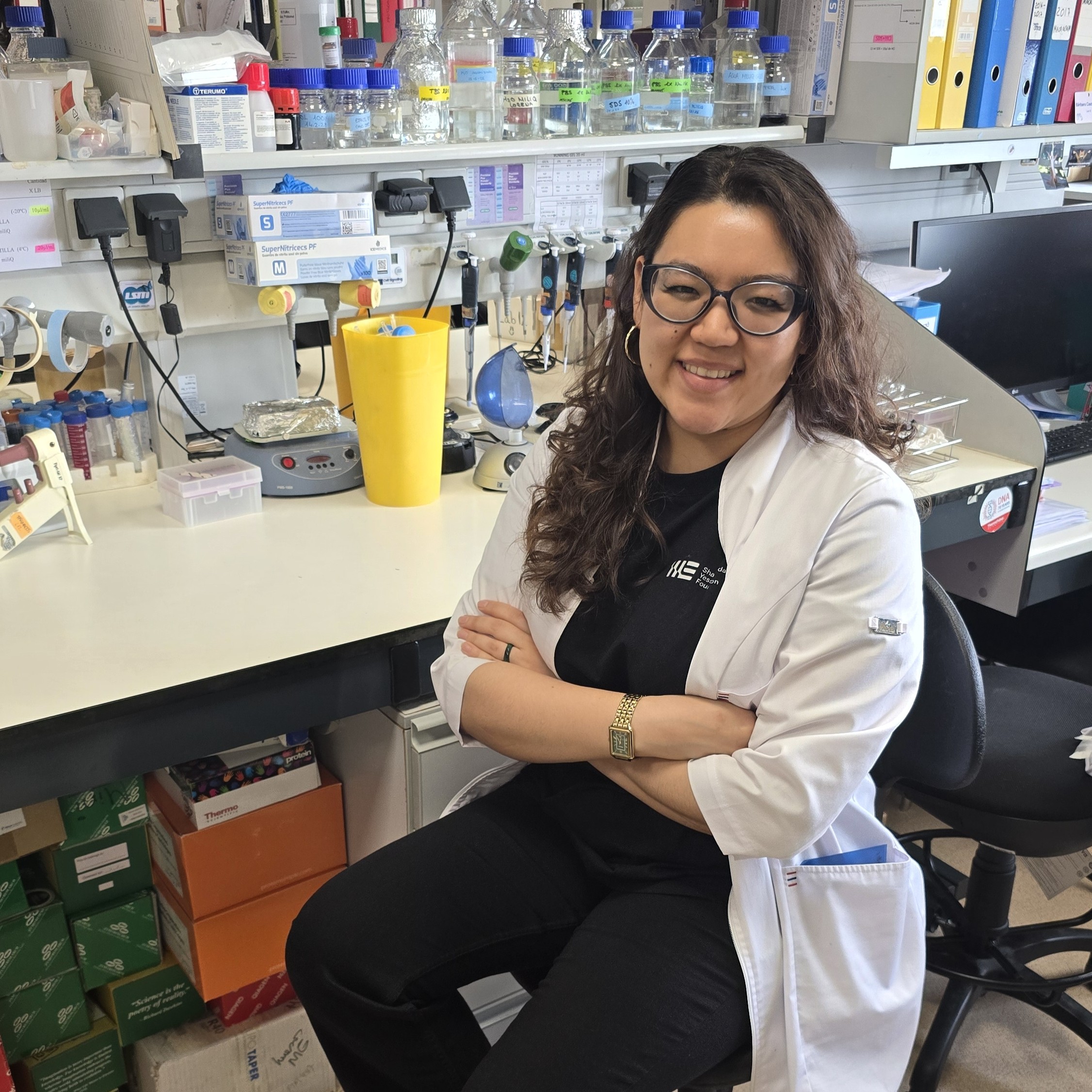 A hematologist from Karaganda used to “treat” her stuffed toys in early childhood. Today, 27-year-old KarSMU graduate Azaliya Turgunova has completed a research internship in Spain, funded by a Yessenov Foundation grant, which will help accelerate the development of a new drug to combat myeloma.
Getting the Grant
Last year, I applied for the Research Internships Program. The competition was great, memorable, and, of course, nerve-wracking. I had never encountered such an approach to candidate selection before. Now, when I evaluate potential new residents (my future colleagues) among students, I pay attention to the same qualities that the Foundation’s staff looked for when selecting grant winners.
Why I Won
I already had a small but valuable clinical background – two years of working with multiple myeloma patients – as well as the results of our research. That made it easy for me to explain why I was so passionate about my work and why I wanted to win. I believe having a clear answer to these questions makes up 90% of the success in a competition.
Choosing a Lab
I completed an internship at the 12th Oncohematology Laboratory of the Cancer Research Center at the University of Salamanca in Spain. This center is one of the world’s leading institutions for multiple myeloma research. The lab is headed by Dr. Maria-Victoria Mateos, one of the most renowned figures in the global myeloma research community. Choosing this laboratory was an obvious decision for me.
The Internship
As part of a research project, we investigated the biological mechanisms that cause tumor cells to lose sensitivity to isatuximab, a novel drug. Nearly 40 people worked in the laboratory, yet it was a close-knit team. The laboratory assistants, technicians, PhD and Master’s students were all true professionals and incredibly kind to me – especially my mentor and project leader, Dr. Mercedes Garayoa.
What impressed me most about my colleagues was their healthy work-life balance. I was constantly asking questions and redoing tasks, yet they always explained everything with patience and enthusiasm. They treated differences in age and experience with understanding and respect, and showed that same respect for Kazakhstan and our culture.
 What I Achieved
During my internship, I learned how to work with cell cultures: I cultured tumor cells, evaluated cell viability after drug exposure, and measured the levels of proteins that influence their behavior. I was also introduced to other cutting-edge technologies, such as CRISPR/Cas9, which allows the DNA of cells to be modified. This is long-term research, and it is still ongoing.
Along with new laboratory skills, I brought back from Spain the phrase “Tranquila, no pasa nada” (“Calm down, nothing’s wrong”) – a philosophical motto I now constantly repeat to myself and those around me. Professor Garayoa and I have submitted a grant application for a joint research project in Kazakhstan. We are currently awaiting the decision.
What Else Is Worth Exploring in Spain
I spent an entire weekend in Madrid, where I attended a flamenco show and saw the masterpieces at the Prado Museum. Following my colleagues’ advice, I visited two ancient cities in the Castile and León region: I saw the Roman aqueduct of Segovia and the medieval defensive walls of Ávila. And, of course, I explored Salamanca inside and out – a warm, cozy, and vibrant university town. Together with my colleagues, I also hiked up the Peña de Francia mountain and celebrated the Christmas holidays. It was an unforgettable experience.
Tips for Interns
Try to immerse yourself in the culture of the host country and live these three months just like the locals do. Start learning the language and speaking it – even if it is just at the supermarket – try their traditional dishes, and show genuine interest in their history and traditions. You will gain memories and experiences that will stay with you for a lifetime. Be open-minded, kind, and curious. Share stories about Kazakhstan with passion, and treat your colleagues to kurt and baursaks – they will definitely never forget you! And ask as many questions as possible.
Looking Forward
I am currently working in the Oncohematology Department and teaching residents at the medical university. I am also involved in a newly established multiple myeloma working group at our university. We update clinical guidelines, discuss challenging cases, and conduct research. My goal is to advance professionally in highly specialized technologies, such as autologous bone marrow transplantation.
And in My Free Time…
The two things I dedicate most of my time to outside of work are my family and my hobby – ballroom dancing. Three years ago, I started learning the cha-cha-cha, and I haven’t been able to stop since. Dancing has taught me that results don’t come quickly; they require hard work and patience. And there will definitely be plenty of mistakes along the way.
Seen by: 3