
Aida Baibussunova
Speciality: Medicine. Internship: Harvard Medical School,USA.
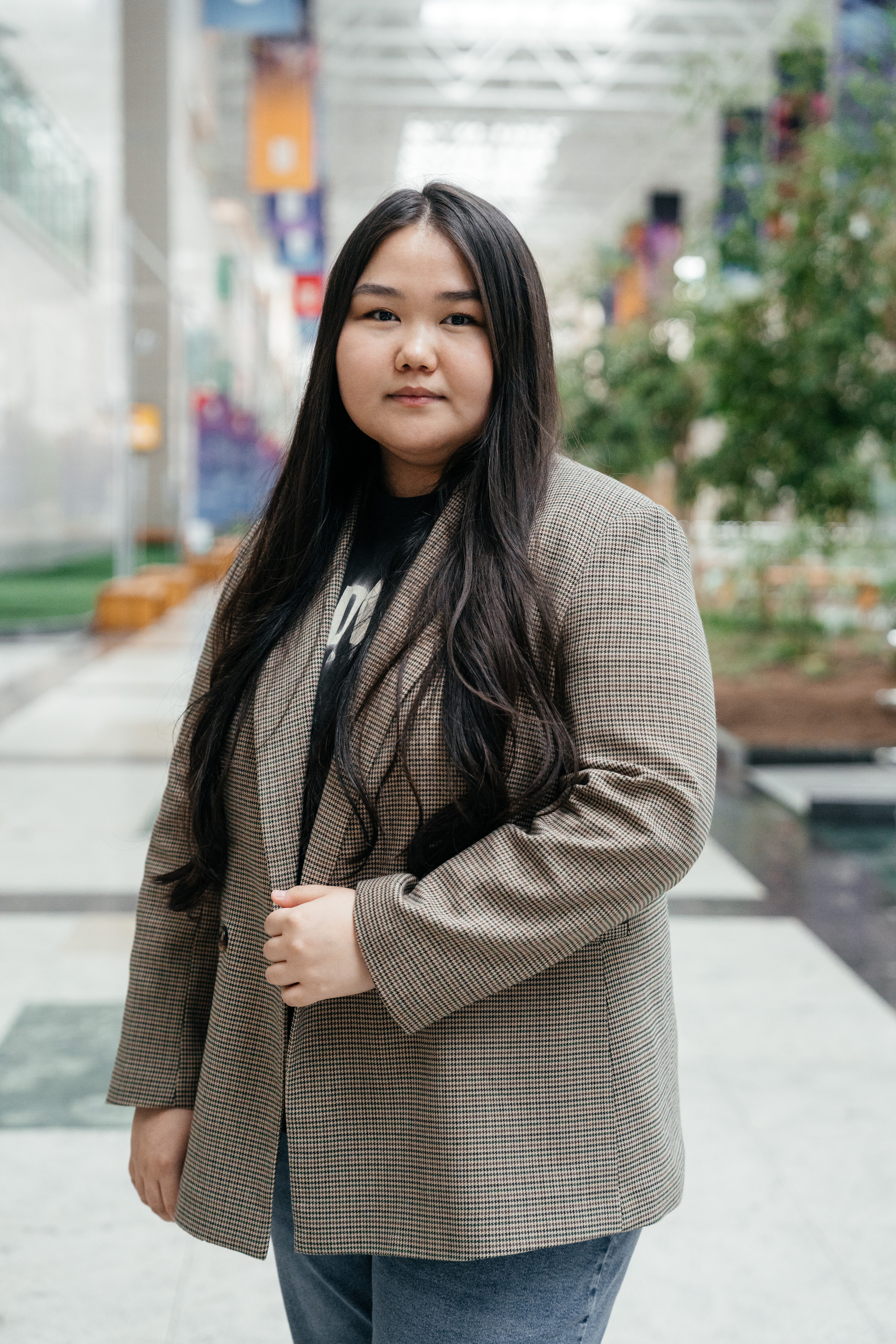 This winner of the Yessenov Foundation’s Research Internships in World Laboratories Program hails from Qostanai. Aida, 24, is a medical intern at the Astana Medical University. No matter where she is – Boston or Seoul, Rome or Tokyo – she is always learning, genuinely believing that the most important thing lies in the details. And how could it be otherwise? After all, it’s the seemingly insignificant nuances in an experiment that add up to the outcome of a major scientific research. Some of the experience of the young Kazakhstani scientist will be useful to you as well.
Why Medicine?
For as long as I can remember, I’ve always been sure that I would become a doctor. I found it incredible that a person’s knowledge and hands could change someone else’s fate. Working with patients and my first research convinced me that medicine is not just a profession, but a way of life that combines science and humaneness.
The Shakhmardan Yessenov Foundation Internship Competition
The whole process felt more like a dialogue – it required quick thinking and the ability to answer unexpected questions, but that’s exactly what helped me open up. What I appreciated most was that the questions demanded not memorized answers, but a real understanding and genuine passion for my work. It was an opportunity to showcase not only my achievements, but also my inner motivation.
Why Did I Win?
I believe sincerity played a key role – I was not pursuing just ‘a line on my resume’, but rather the chance to make a real contribution to the development of a field I am passionate about. To those who are just applying and preparing for the competition, I can say the following. Be yourself, express your personal point of view, and don’t be afraid to take initiative, because that’s exactly the quality that will help you find that perfect internship. And to those who have already won the Yessenov Foundation Program, I would advise making the most of conferences and scientific seminars. That’s where the most valuable contacts and connections are made. It’s important to apply to several laboratories and be prepared to openly talk not only about your strengths but also about what you want to learn. You should be able to explain why your work matters to people. Remember: science values sincerity and persistence more than formality.
Finding a Lab. Why Harvard?
I wanted to focus on oncology and early diagnostic methods. I studied publications, wrote to professors, and went through interviews. Out of six invitations, including one from the Broad Institute of MIT and Harvard, the BENMD program led by Professor Hak Soo Choi at Harvard Medical School stood out for its combination of innovation and clinical focus. The response came immediately, and I took it as a sign that I had found a place where my interests perfectly aligned with the lab’s opportunities.
What Did I Work On?
At Harvard, I was developing methods for breast cancer imaging. The research was a combination of analytical chemistry, biochemistry, radiology, and surgery. The goal was to make the tumor ‘visible’ to a surgeon in real time and to apply this approach to the diagnosis of neurodegenerative diseases. Two of my hypotheses were confirmed, which was a particularly inspiring moment for me. The atmosphere in the lab was unique: any idea was immediately tested in practice. You would voice an idea today and test it tomorrow. This kind of dynamic created the feeling that discoveries were being made every single day. The research resulted in the projects, whose outcomes will be published in journals including Nature Chemistry and Science Translational Medicine.
What Did I Learn in America?
I participated in 5 lab projects, contributed to 6 scientific articles, delivered 3 major presentations at lab meetings, developed 14 research protocols and held 10 meetings with lab members and collaborators. I had the opportunity to attend an immunology conference at Harvard Medical School. I also met scientists from various universities and research groups.
In the main project, I needed to characterize an entire group of compounds, and for this I used MATLAB and Python, as their precise interaction with the human body has not yet been described. In another project, I had to rely on my knowledge of physics and apply Fick’s second law.

I’ve learned a lot from my professor. Not only about science and work but also how to maintain a harmonious work-life balance, pace myself, and set priorities. I am confident that the projects I contributed to will significantly advance the improvement of surgical interventions in oncology. And the project related to Alzheimer’s disease may offer a new type of therapy. One of the key achievements of the internship was confirming a hypothesis regarding acute kidney injury associated with this disease.
Life Hacks for New Winners
First, remember that searching for an internship and a supervisor is a two-way process. You have the right to weigh all the pros and cons and choose the best option for yourself. I advise you not to rely on contacts from your own universities, but to write to professors in your fields of interest yourself, without fear of subsequent interviews. The journey of many internship winners began with a simple email: talk about your interests, ideas, and experience. Sometimes the most important decision is simply to hit the ‘send’ button.
Second, learn to conserve your energy. Science is like a marathon not a sprint. It’s a very long distance, and if you go non-stop, you risk burning out before reaching the finish line. Balance – sleep, physical activity, time for creativity, and the people around you – is not a ‘luxury’ but the fuel for new discoveries.
And third, seek out true mentors, not just formal supervisors. A supervisor can assign a task and request a result, but a mentor teaches you how to navigate the chaos of science without losing yourself in the process. And that mentor isn’t always the head of the lab.
Today and Tomorrow
I continue to work remotely on the Harvard lab’s projects and on articles resulting from the internship. After Harvard, I had the opportunity to study at La Sapienza University in Rome, which became a new academic and cultural experience for me. I recently returned from Seoul National University, where, as a visiting scholar, I continued research on nanoparticles, specifically mRNA constructs for therapy. All of this has provided me not only with professional knowledge but also with an understanding of which academic culture and infrastructure best align with my interests and lifestyle. I am currently interviewing for PhD programs set to begin in 2026.
Beyond Science
For many years, I have been engaged in painting and sculpture, so art in all its forms holds special significance for me. Recently, for example, I visited an exhibition by the Korean artist Chun Kyung-Ja – her works impressed me with their bold colors and emotional depth. My interest in art history and architecture helps me look at my work differently: both fields value composition and harmony. Over the past 3 years, I have visited 14 countries, and for me, travel is not just a leisure activity but a source of inspiration. In every new culture, I find ideas: in Japan, for instance, I was deeply impressed by the Japanese attention to detail – whether it was the strict symmetry of temple architecture or the way tea is served.
Seen by: 2,169